
 영어
영어 프랑스
프랑스 스페인
스페인 러시아
러시아 한국
한국 일본
일본


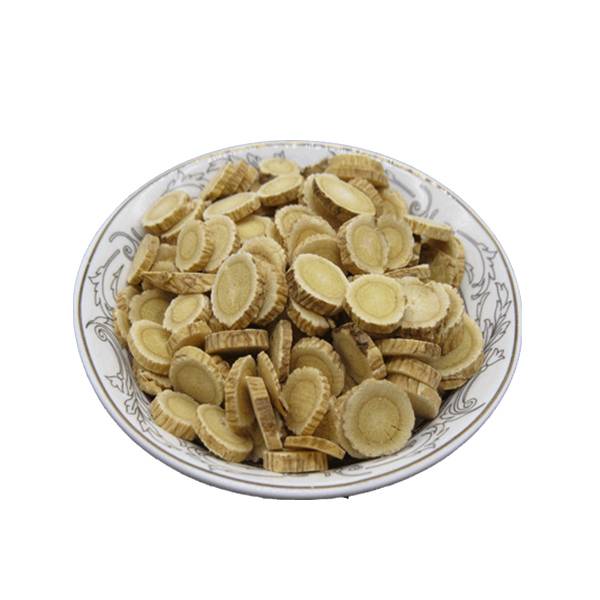
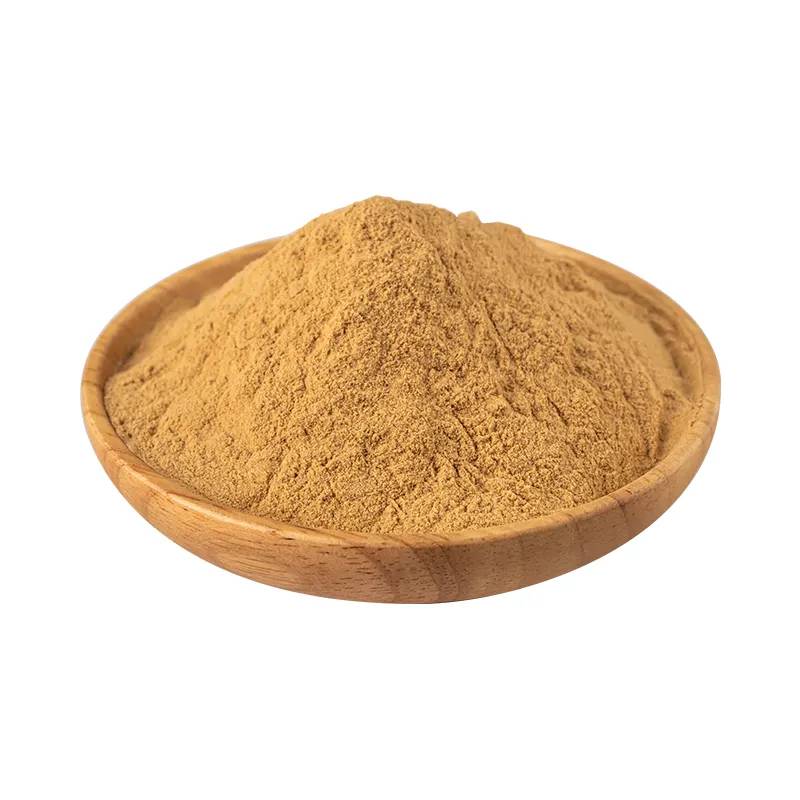
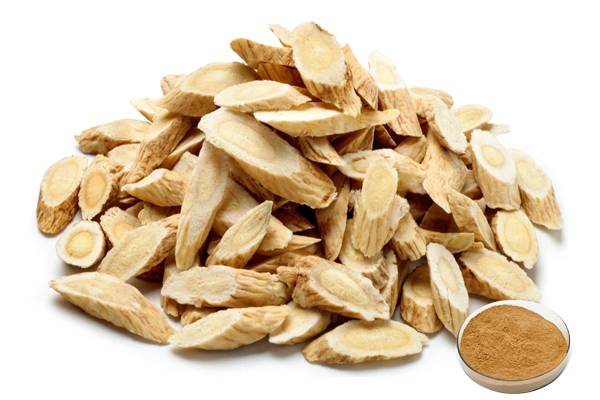
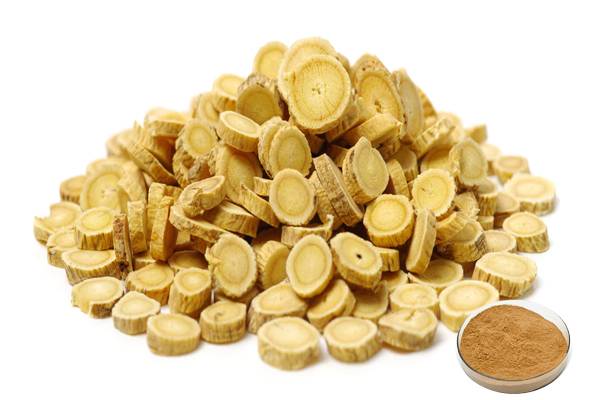
Astragalus Root Extract Powder | 30% - 70% Polysaccharides (UV)
Botanical Source: Astragalus membranaceus (Fisch.) Bge. roots
Active Ingredients: Standardized Astragalus Polysaccharides
Commercial Assay: 30.0% – 70.0% Polysaccharides
외모: Brown Yellow Fine Powder
Mesh Size: 100% through 80 mesh (D50: 120–180 μm)
Bulk Density: 0.35 – 0.55 g/mL
Tapped Density: 0.50 – 0.70 g/mL
Pesticide Profile: Complies with (EC) No 396/2005 & USP <561>
Certifications: BRCGS, IFS,Halal, Kosher, ISO22000
Sample: 10-50g Free Sample Available for R&D
- 설명
- 데이터 시트
-
What is Astragalus 루트 Extract Powder ?
Astragalus Root Extract Powder is an active botanical ingredient derived from Astragalus membranaceus roots다다다. The bulk material is systematically quantified via UV-Vis spectrophotometry or gravimetric alcohol precipitation to anchor standardized Astragalus 다당류 concentration thresholds at a 30.0% to 70.0% range on dried basis.
The clean-label production stream utilizes purified water as the primary solvent, executing multi-stage membrane ultrafiltration to confine residual proteins and ash variations. This engineering control secures full compliance with elemental impurity limits defined in USP <2232> and restricts residual solvent matrices well within ICH Q3C Class 3 boundaries, streamlining cross-border cGMP vendor qualification audits.
The physical matrix is optimized for high-throughput solid and liquid dosage lines by stabilizing flowability parameters, including bulk density and a verified particle size distribution (100% passing 80 mesh). This configuration eliminates static-charge agglomeration inside blending hoppers, preventing powder segregation, tablet capping, or mass variation across automated capsule filling, tableting, and instant sachet lines.
규격
제품 이름
Standardized Astragalus Root Extract Powder
라틴어 이름
Astragalus membranaceus (Fisch.) Bge
캐 스 가 없다.
89250-26-0
Plant Part Used
Root
유효 성분
Astragalus Polysaccharides
Assay (Dried Basis)
30.0% – 70.0%
시험 방법
UV-Vis Spectrophotometry
외모
브라운 노란색 고운 가루
Loss on Drying (LOD) ≤ 5.0% by USP <731> 105°C for 3 hours Ash Content ≤ 5.0% by USP <561> / EP 2.4.16 Bulk Density 0.35 – 0.55 g/mL by USP <616> Method I Tapped Density 0.50 – 0.70 g/mL by USP <616> Method I Mesh Size 100% through 80 mesh (D50: 120–180 μm) by USP <786> Heavy Metals (ICP-MS) Pb ≤ 0.5 ppm, As ≤ 0.5 ppm, Cd ≤ 0.2 ppm, Hg ≤ 0.1 ppm [Compliant with USP <2232>] Residual Solvents (GC-HS) Ethanol ≤ 5,000 ppm, Methanol/Other Solvents N.D. (LOD = 10 ppm) [ICH Q3C Class 3] Pesticide Residues Complies with (EC) No 396/2005 & USP <561> via GC-MS/MS & LC-MS/MS Microbiological Security TAMC ≤ 1,000 cfu/g, TYMC ≤ 100 cfu/g, Salmonella: Absent/25g, E. coli: Absent/10g [USP <61> & <62>] 견적을 찾고 계십니까?우리에게 연락Request a Custom QuoteQuality & Compliance
Dietary Identity & Traceability
Every production lot undergoes structured botanical origin verification to satisfy global market entry parameters. The clean-label bulk material is fully backed by valid Halal and Kosher dietary certificates alongside an official Non-GMO identity statement and non-irradiated declaration.Toxicological & Solvents Control
Utilizing purified water as the primary solvent with multi-stage membrane ultrafiltration, the process limits residual organic substances within ICH Q3C Class 3 boundaries. Analytical validation guarantees Ethanol ≤ 5,000 ppm, while keeping Class 1 and Class 2 solvents below regular pharmacopeia detection thresholds.Elemental Impurities Boundary
Heavy metals are systematically quantified via ICP-MS to confine Pb ≤ 0.5 ppm, As ≤ 0.5 ppm, Cd ≤ 0.2 ppm, and Hg ≤ 0.1 ppm. This control secures full compliance with USP <2232> criteria for dietary supplements of botanical origin and satisfies California Proposition 65 daily intake limits.Pesticide MRLs Compliance
Quality clearance protocols run every delivery lot through an internal analytical matrix equipped with validated HPLC, GC-HS, and ICP-MS testing instruments. Every batch is verified against current USP <561> and EU Regulation (EC) No 396/2005 limits across a comprehensive multi-residue screening panel.
Key Advantages
Engineered Flowability & Uniformity
The matrix features 100% through 80 mesh (D50: 120–180 μm) geometry with calibrated densities (Bulk: 0.35–0.55 g/mL, Tapped: 0.50–0.70 g/mL). This fluid profile prevents powder segregation inside V-blenders, eliminating mass variation risks across automated capsule filling and tableting production lines.Direct Compression Compressibility
The powder architecture anchors a predictable Carr's Index within the 21%–30% range, securing structural compressibility. This mechanical profile allows for seamless direct compression (DC) processing without a wet-granulation stage when blended with microcrystalline cellulose (MCC), controlling tablet friability limits.Thermal & pH Thermal Tolerance
The high-molecular-weight polysaccharides matrix exhibits strict chemical stability under high-heat pasteurization and fluid-bed drying conditions up to 60°C. The water-extraction stream maintains structural integrity across a broad pH range, protecting active compound potency from chemical degradation during large-scale manufacturing.Excipient Compatibility & Dissolution
Validated chemical inertness ensures reliable compatibility with dicalcium phosphate, lactose, and magnesium stearate without triggering unexpected cross-linking. The refined crystalline architecture delivers accelerated dissolution kinetics in ambient water, preventing visible sediment or physical clumping inside multi-ingredient instant beverage sachet lines.Monograph Impurity Limits Alignment
Every supply lot ensures strict verification against USP <2232> and ICH Q3C Class 3 limits, restricting elemental impurities to Pb ≤ 0.5 ppm, As ≤ 0.5 ppm, Cd ≤ 0.2 ppm, and Hg ≤ 0.1 ppm. This granular control eliminates analytical interference during downstream HPLC assay validation, streamlining cross-border vendor qualification.Applications
Two-Piece Hard Capsule Shell Filling
Optimized for automatic intermittent-motion capsule filling machines running at high-throughput lines. The calibrated tapped density (0.50–0.70 g/mL) ensures uniform slug formation during tamping-pin compression, maintaining fill-weight variations within strict absolute deviations in standard hard gelatin or hypromellose (HPMC) capsule shells.Direct Compression Tableting Matrices
Engineered as an active crystalline agent suitable for direct compression (DC) solid-dosage matrices without a preliminary wet-granulation step. When blended with microcrystalline cellulose (MCC), the matrix maintains granular mechanical interlocking, sustaining target tablet hardness and controlling tablet friability within ≤ 0.5% boundaries under rotary press compression forces.Multi-Ingredient Dry-Powder Blend Sachet
Calibrated at an exact particle size distribution of 100% through 80 mesh (D50: 120–180 μm) to prevent mass segregation inside ribbon blenders. The low static-charge retention minimizes electrostatic agglomeration with adjacent micronutrients, ensuring active substance distribution homogeneity when dry-mixed with standard diluents, sweeteners, and acidulants.Modified-Release Matrix Formulations
The stable polysaccharides morphology and low organic impurity profile prevent unexpected chemical cross-linking with hydrophilic polymer matrices. This chemical inertness ensures a predictable dissolution release rate curve when formulated with high-viscosity hydroxypropyl methylcellulose (HPMC K100M) for overnight sustained-release tablet architectures.
Technical FAQ
Q1: How does industrial thermal processing affect the molecular stability of this standardized astragalus extract inside multi-ingredient functional liquid lines?
A1: The high-molecular-weight polysaccharides matrix remains stable under neutral pH conditions up to standard pasteurization boundaries. However, exposure to thermal desiccation exceeding 60°C or combining acidity below pH 3.5 with prolonged boiling induces partial acid hydrolysis of glycosidic bonds, requiring formulation buffering agents to lock assay values.Q2: What causes turbidity when blending astragalus root extract powder into aqueous formulas, and how are sedimentation risks mitigated on the shop floor?
A2: Turbidity is driven by residual botanical proteins and insoluble ash variations. The production process utilizes multi-stage membrane ultrafiltration to restrict these components, optimizing alternative-water dissolution kinetics and securing clear dispersion with verified low turbidity boundaries across commercial shelf-life storage.Q3: Why does a variance occur when testing astragalus polysaccharides bulk powder via the Phenol-Sulfuric Acid method versus the Anthrone-Sulfuric Acid protocol?
A3: The variance stems from different chemical reactivity with monosaccharides. The Phenol-Sulfuric Acid method reacts uniformly with pentoses and hexoses to profile total heteropolysaccharides, whereas the Anthrone-Sulfuric Acid protocol lacks pentose sensitivity. To secure compliance, every lot is quantified via UV-Vis Spectrophotometry calibrated against pure D-glucose reference standards.Why Partner With Green Spring Technology?
Risk Mitigation & Audit Readiness
The manufacturing infrastructure operates under verified cGMP protocols, holding valid BRCGS and IFS Food certificates to streamline vendor qualification. Standardized technical documentation packages—including full validation dossiers, batch-specific HPLC chromatograms, heavy metal profiles, and 24-month Real-time Stability Data—are systematically provided to satisfy internal and third-party regulatory audits.Stringent Analytical Verification Alignment
Inconsistent plant raw materials compromise automated tableting and capsule filling lines. Quality clearance protocols run every delivery lot through an internal analytical matrix equipped with HPLC, GC-HS, and ICP-MS testing instruments to verify compliance against USP and EP monograph limits, ensuring the active ingredient coordinates with adjacent formulation components without processing failure.Proactive Technical & Regulatory Support
Technical integration extends direct engineering assistance to downstream formulation teams. From delivering specific particle size distribution curves to adjusting bulk density parameters for target compaction matrices, the technical framework resolves tableting and encapsulation operational challenges, accelerating regulatory filing timelines and customs clearance in regulated global markets. -
Download Data Sheet: COA, TDS, MSDS Please fill in the form below to receive the full technical documents via email.