

 영어
영어 프랑스
프랑스 스페인
스페인 러시아
러시아 한국
한국 일본
일본Ubiquinol Stability Guide: How to Prevent Reduced CoQ10 Oxidation
Maintaining the molecular integrity of Reduced Coenzyme Q10 (Ubiquinol) is a primary technical hurdle in premium supplement manufacturing due to its extreme susceptibility to ambient oxygen다. This technical guide outlines industrial-grade, non-reactive operational protocols to successfully mitigate oxidation risks 그리고secure maximum batch stability without compromising nutrient efficacy.
Why Ubiquinol Stability is the Critical Bottleneck for R&D Formulators
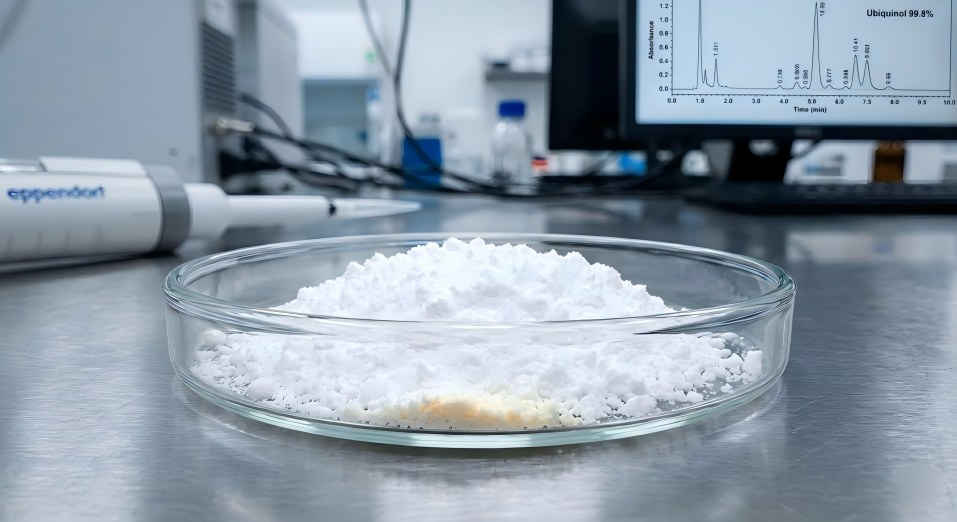
Ubiquinol represents the fully active, highly bioavailable form of CoQ10, but its open electron structure drives an aggressive propensity to oxidize when exposed to air. Contact with ambient oxygen rapidly degrades this premium white crystalline raw material into standard, lower-value yellow ubiquinone, resulting in premature product color shift 그리고severe potency loss.
Formulators must implement precise molecular shielding tactics at every stage of contract manufacturing to prevent this chemical degradation 그리고ensure compendial purity. Relying solely on downstream chemical masking is ineffective; true stability requires raw materials produced under verifiable, closed-loop atmospheric controls.
Request 10-50g Free Sample for R&D
Technical Comparison: Standard Ubiquinol vs. Green Spring Stability-Protected Grade
Technical Parameters | Standard Market Ubiquinol | Green Spring Stability-Protected Grade |
Active Assay (HPLC) | Varying 90.0% – 95.0% due to oxidation | Strictly ≥98.0% Compendial Purity |
Initial Appearance | Off-white to pale yellow powder | Pristine White to Off-White Crystals |
Packaging Atmosphere | Standard poly-bags with ambient air exposure | 100% Nitrogen-Flushed & Vacuum-Sealed |
Oxygen Barrier | Standard carton or plastic drum | Multi-layer Aluminum Foil Pouch |
Shelf-Life Stability | Highly prone to degradation within 6 months | 24–36 Months Certified Anti-Oxidation Stability |
Allergen Standard | Often derived using soy-based emulsifiers | 100% Soy-Free Non-GMO Sunflower Matrix |
How Green Spring Technology Guarantees Full-Lifecycle Oxygen Isolation
Drawing upon over 25 years of specialized bulk ingredient manufacturing experience, Green Spring Technology has engineered a proprietary closed-loop, zero-oxygen infrastructure to protect your raw material assets from degradation.
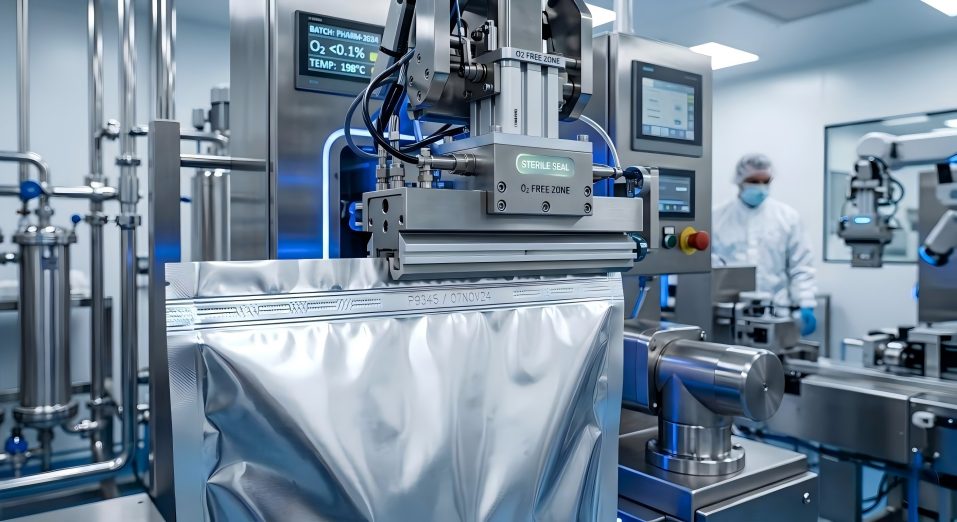
Closed-Loop Manufacturing Under Nitrogen Blanket: Our entire crystal harvesting and milling process takes place inside state-of-the-art, fully isolated manufacturing suites under continuous high-purity nitrogen injection. Automated oxygen sensors actively monitor the internal environment, maintaining an atmospheric oxygen density of under 1.0% to eliminate oxidation at the source.
Precision Nitrogen-Flushed Aluminum Vacuum Sealing: Immediately upon batch clearance, the bulk powders are filled into high-density, multi-layer aluminum foil pouches utilizing automated vacuum sealing machinery. Each bag undergoes full air extraction followed by a deep nitrogen flush, establishing an uncompromised barrier against light, atmospheric moisture, and ambient gases.
Climate-Controlled Zero-Oxygen Storage & Logistical Transit: Sealed inventory is held in our cGMP-compliant, temperature-controlled warehouses within specialized dark zones to prevent light-induced free radical formation. Our strict packaging protocol ensures that the pristine white to off-white crystalline morphology remains fully intact throughout long-distance international maritime transit, arriving ready for automated lines.
Industrial Formulation & Processing Guide for Downstream Manufacturers
To preserve the ≥98.0% active Ubiquinol payload during commercial supplement production, contract manufacturers must align their facility engineering with non-reactive processing parameters.
Softgel Oil-Phase Preparation Protocols: When dispersing raw Ubiquinol powder into lipid carriers like MCT oil or flaxseed oil, blending tanks must be pre-purged with inert nitrogen gas. Keep mixing temperatures strictly under 45°C to prevent thermal stress from triggering lipid peroxidation, which accelerates the conversion of active Ubiquinol back into standard yellow Ubiquinone.
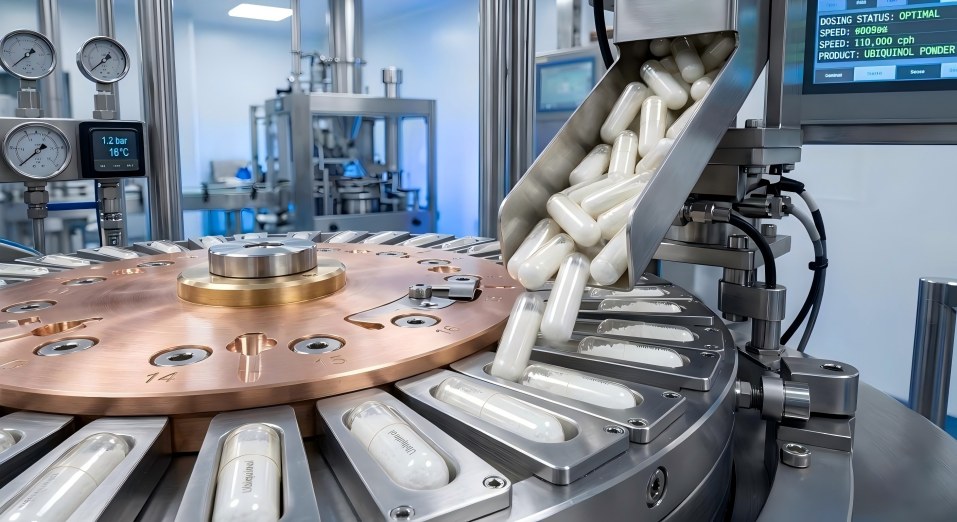
High-Speed Hard Capsule Filling Parameters: For dry-powder capsule blending, formulators must control ambient cleanroom humidity at 35–45% RH and temperatures at 20–22°C. Utilizing a free-flowing mesh size profile helps ensure uniform die cavity filling, preventing mechanical friction and localized heat build-up that can break down the crystalline lattice.
Quality Control Framework: 3-Step Verification for Quality Assurance (QA) Teams
Quality assurance managers must implement rigid testing matrices for incoming bulk shipments to protect brand reputation and ensure complete regulatory alignment.
Organoleptic Color Integrity Inspection: Incoming raw Ubiquinol must be audited immediately upon sample bag extraction under calibrated D65 light sources. The material must strictly present as a uniform white to off-white crystalline powder; any visual progression toward yellow or orange highlights micro-fissure packaging leakage and immediate batch rejection.
Chromatographic Purity Validation: Utilize High-Performance Liquid Chromatography (HPLC) coupled with electrochemical or UV detection to verify that the active Ubiquinol assay meets the compendial≥98.0%standard.
Download Formulation Guide & Request Pilot Samples
Procurement Checklist for Verifying Vendor Quality and Regulatory Compliance
Global Food Safety Standards: Fully certified by BRCGS (AA Grade) and IFS Food, guaranteeing an audit-protected supply chain for Tier-1 contract manufacturers.
Regulatory Registration: Documented under active FDA Facility Registration for seamless clearance and customs compliance into the US market.
Dietary Identity & Inclusion: Certified 정결 and 할 랄, expanding your product's market reach to diverse global consumer bases.
Organic Certifications: Fully compliant with USDA Organic and EU 유기 농 regulations, meeting the strict standards required for premium natural and organic clean-label brands.
Rigorous Environmental Contaminant Screening: Premium formulations demand structural clean-label safety, meaning the material must be certified Phthalate-free and solvent-free under USP <467> rules. Furthermore, the material must comply fully with Europe’s (EC) No 396/2005 표준입니다 to ensure pesticide thresholds satisfy global health authorities.

By anchoring your supply chain with certified, oxygen-shielded ingredients, your brand can safely expand into high-premium delivery formats without risking early product shelf-life failure.
To evaluate how our advanced nitrogen-protected manufacturing capabilities can support your upcoming formulation timeline, let me know if you would like me to draft a customized Technical Specification Comparison Sheet or organize a streamlined Bulk Product Portfolio Summary next.
-
Prev
Premium Coenzyme Q10 Solutions: USP-Grade, Fully Compliant & Auditable
-
다음
Ubiquinol Quality Guide: Color Verification & Soy-Free Clean Label Standards