

 영어
영어 프랑스
프랑스 스페인
스페인 러시아
러시아 한국
한국 일본
일본pH-Resistant Curcumin Ingredient: Consistent Color Across All Acidic and Neutral Foods
In many food companies' R&D labs, perplexing scenarios like these have unfolded:
Scenario A: A meticulously formulated curcumin yogurt leaves the factory with an enticing sunny golden hue, yet after just one week on shelves, its color gradually fades to a dull, ashen shade다다다.
Scenario B: Two production lines using identical curcumin raw materials—one making acidic fruit juice drinks, the other producing neutral baking mixes—yield final products with entirely different yellow hues.
Scenario C: When adding other functional ingredients, engineers discover that components with differing pH levels cause subtle shifts in the previously stable curcumin color.
The Scientific Truth: Curcumin's “Chameleon” Properties
The sensitive phenolic hydroxyl group in curcumin's molecular structure makes it a renowned “pH indicator” in the food industry:
·In acidic environments (pH < 5), curcumin molecules undergo protonation, shifting toward orange-red hues
·In neutral to weakly alkaline conditions (pH 6-8), molecular structure changes, resulting in a dark yellow color
· Minor pH fluctuations (±0.5) can cause visually noticeable color differences
Hidden Costs: Overlooked Quality Losses
This instability brings not only technical challenges but tangible commercial losses:
1. Quality Consistency Dilemma
· Color variations between product batches make unified quality control standards difficult
· Cross-category product lines cannot establish consistent brand color recognition
2. Restricted R&D Innovation
· Formulation engineers must design products around pH constraints
· Inability to freely combine functional ingredients with varying acidity/alkalinity
3. Supply Chain Risks
· Minor batch variations from raw material suppliers are amplified
· Difficulty ensuring color stability in end products
4. Consumer Trust Crisis
· Color changes are misinterpreted as product spoilage
· Professional image of “natural products” is compromised
Industry Breakthrough: Seeking the True “Color Stability Anchor”
Currently, the food industry is undergoing a transformation driven by both clean labeling and functional fortification. What companies need isn't another natural ingredient requiring “special handling,” but a reliable solution that maintains consistent color across diverse food systems.
The core issue is clear: if curcumin's color performance remains constrained by environmental pH, then no amount of stabilizers or process parameter adjustments will address the root cause.
True breakthroughs must begin by altering curcumin's inherent pH responsiveness—adapting the ingredient to the environment, not the environment to the ingredient. This is the logical starting point for our “Broad pH Tolerance Curcumin” technology solution: a fundamental innovation that resolves color consistency issues once and for all.
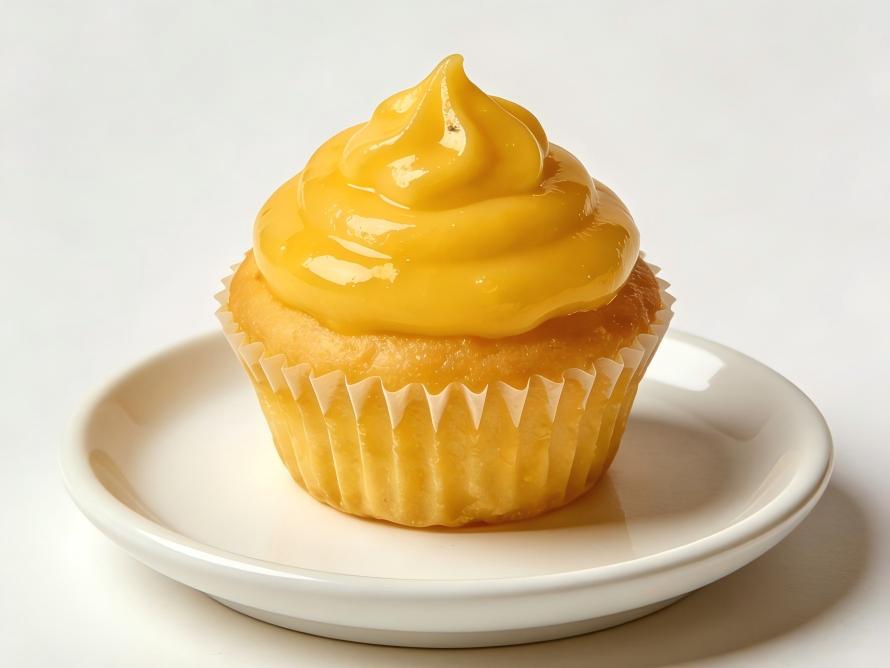
Part One: Molecular-Level Color Locking Technology Ends pH-Induced Color Variation
While the industry widely regarded curcumin's pH sensitivity as an inherent property, we pursued a disruptive technical path: redesigning curcumin's color expression mechanism through molecular engineering, transforming it from an “environmental indicator” into a “color-stable output unit.” The core breakthrough of the new generation of wide pH tolerance curcumin lies in achieving triple molecular-level stability.
I. Innovation Principle: Constructing an Intramolecular Color “Steady-State System”
1. Chromophore Shielding Technology (Patent Protected)
· Root Cause: Traditional curcumin's color shift stems from proton gain/loss at its phenolic hydroxyl (-OH) group under varying pH, altering electron cloud distribution.
· Solution: Through targeted molecular modification, a stable microenvironment is established around the sensitive chromophore while preserving the natural structure. This technology reduces the reactivity of key functional groups with H⁺/OH⁻ ions by over 90%, suppressing color change reactions at their source.
2. Smart Buffering Microcapsule System
· Working Principle: Each curcumin particle is encapsulated within a biopolymer wall material possessing pH buffering capacity. When external pH fluctuates, the wall material first undergoes localized neutralization, maintaining a stable neutral microenvironment (pH 6.5-7.0) within the particle—functioning as a “personal pH shield” for curcumin.
3. Charge State Locking Technology
· Breakthrough: Surface engineering precisely controls the particle's isoelectric point, ensuring consistent surface charge states across pH 3-8. This eliminates aggregation, precipitation, and optical property alterations caused by charge shifts.
II. Verifiable Performance Revolution: Data Defines “True Stability”
All technological breakthroughs undergo rigorous third-party laboratory validation. Key performance metrics include:
· Wide pH Color Consistency (Core Breakthrough):
· Within the tested pH range of 3.0–8.0, product CIE Lab* chromaticity coordinates fluctuate less than ±2% (traditional products typically exceed ±30% variation).
· In typical acidic (pH 4.0, simulating yogurt) and neutral (pH 7.0, simulating baked goods) food matrices, visual color difference (ΔE) ≤ 1.5, achieving the “barely perceptible” level in professional color analysis.
· Long-Term Stability (Shelf-Life Assurance):
· Accelerated test results: After 90 days storage at 40°C/75% relative humidity, color decay rate was <3% in both pH 4.0 and 7.0 systems, demonstrating stability unaffected by environmental acidity/alkalinity.
· Real-world shelf life validation: In fermented milk products from partner clients, color remained consistent with factory standards after a full 6-month shelf life.
· Process Compatibility:
· No adverse interactions with common food acidity regulators and processing aids such as citric acid, lactic acid, sodium bicarbonate, and phosphates.
· Color stability remains intact during thermal processing (UHT, pasteurization) and freeze-thaw cycles.
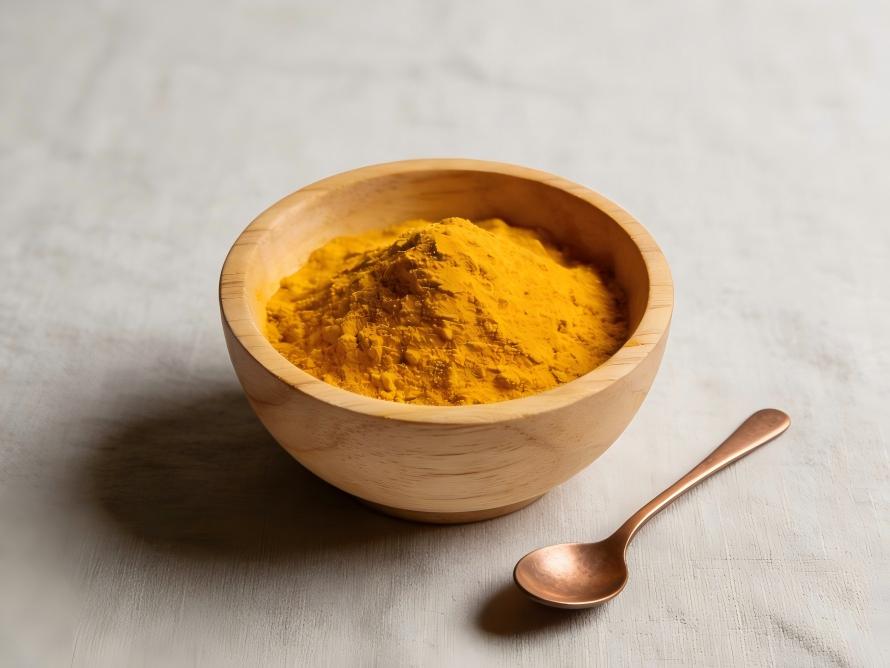
III. The Essence of Technical Value: From “Variable” to “Constant”
The fundamental significance of this technology lies in transforming curcumin from an environment-dependent ‘variable’ into a “constant” that reliably delivers target color in any reasonable food system.
For product developers, this means:
· Formulation Freedom: No longer sacrificing flavor or functional design to adjust pH.
· Predictive Precision: Color performance can be accurately forecasted during R&D and 100% replicated in production.
· Streamlined Supply Chain: Batch variations in raw materials have virtually zero impact on final product color.
Through precise molecular science interventions, we rationally optimize natural ingredient performance. This doesn't alter curcumin's essence but empowers it to adapt to modern food industry complexities—finally reconciling “natural” with “stable.”
Part Two: Application Empowerment—Unlocking “Color Freedom” Across All Food Categories
Technological breakthroughs realize their true value only through widespread application. The new generation of wide pH-tolerant curcumin is redefining the boundaries of “natural coloring,” providing unprecedented color stability solutions for diverse food products.
I. Full-Scene Application Matrix: Consistent Color from Acidic to Neutral
1. Fermented Dairy Products & Acidic Beverages
· Application Scenarios: Yogurt (pH 3.8–4.6), fermented milk beverages, acidic functional drinks
· Traditional Pain Points: Color fading and graying due to acid production during fermentation and minor pH fluctuations during shelf life
· Solution Performance:
· Fermentation Consistency: Maintains stable color throughout hours-long fermentation without phased color changes
· Shelf-Life Stability: Within a 6-month shelf life, color decay rate <5%, maintaining a “fresh-baked” bright yellow hue
· Case Data: After switching ingredients, a yogurt brand saw an 82% reduction in color-related complaints
2. Bakery & Cereal Products
· Application Scenarios: Bread, cookies, breakfast cereals, noodles (pH 6.5–7.5)
· Traditional Challenges: Alkaline leavening agents (e.g., sodium bicarbonate) cause color darkening and unnatural yellowish-brown hues.
· Solution Performance:
· Pure Color: Delivers rich, natural golden yellow unaffected by processing aids
· High-Temperature Stability: Maintains color integrity during baking (180-220°C) without caramelization discoloration
· Production Advantage: Batch-to-batch color variation (ΔE) controlled within 1.2, enabling standardized color in industrial production
3. Innovative Food Development
· Application Scenarios: pH gradient products (e.g., fermented fruits/vegetables), functional composite products
· Solution Value:
· Design Freedom: R&D teams focus on flavor and functionality without formula adjustments for pigment constraints
· Innovation Potential: Enables development of cross-pH category products unattainable with traditional techniques
II. Real-World Application Feedback
"We produce both acidic dairy drinks and neutral cereal bars. Previously, we needed to source two distinct curcumins and adjust formulations separately. Switching to the wide pH tolerance product not only unified ingredient procurement but, more importantly, finally aligned the yellow hues across both categories with our brand's color standard. Production planning flexibility has significantly increased, and inventory management has been streamlined by 30%."
— R&D Director, Major Food Group
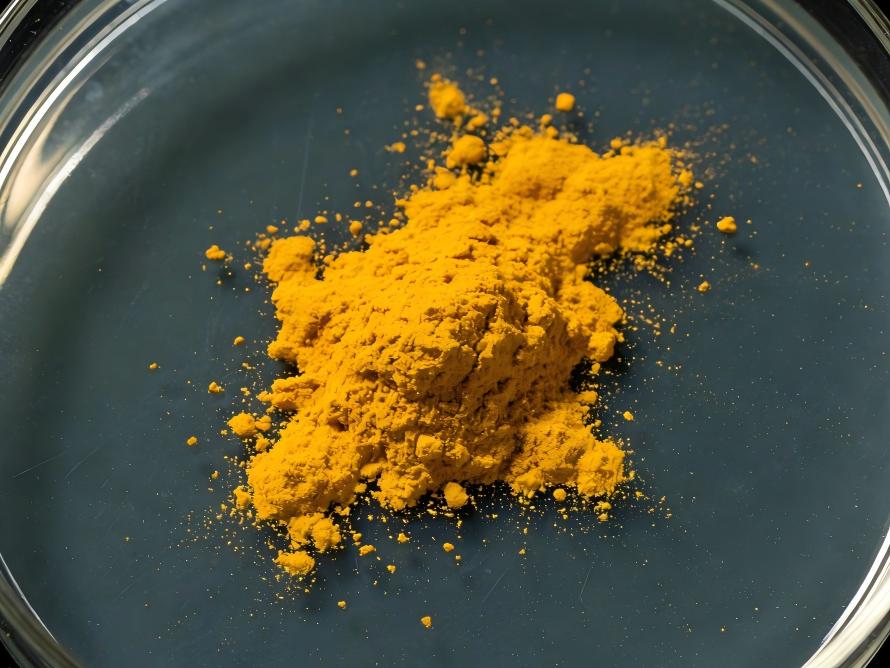
This technological breakthrough is translating into tangible commercial advantages. Wide pH-tolerant curcumin not only resolves coloring challenges but also delivers multidimensional value to food companies through its exceptional stability and adaptability—optimizing supply chains, simplifying production, and enhancing quality. It is becoming a key cornerstone for achieving color standardization and unlocking product innovation freedom in modern food manufacturing.
Part Three: Take Action Now—Embark on Your New Era of “Color Stability”
Technological innovation ultimately creates value for customers. We stand ready with comprehensive technical support and supply chain solutions to help you rapidly adopt the next-generation wide pH-tolerant curcumin ingredient, achieving a leap in product quality.
I. Support from Green Spring Technology
1. Complete Technical Documentation:
· Provide COA (Certificate of Analysis) for each batch with key indicators clearly marked.
· Provide MSDS, Technical Data Sheets (TDS), and detailed pH-color stability curves.
2. Dedicated Application Support:
· Grant access to our internal Application Database for querying successful case studies and process expertise.
· Offer joint R&D and customized solutions for complex projects.
3. Quality & Supply Commitment:
· Quality Consistency: Guaranteed <3% variation in key color metrics between batches.
· Supply Chain Transparency: Traceability from raw materials to finished products.
II. Contact Us to Begin Your Journey
· Mobile/WeChat/WhatsApp: +86 13649243917
· Email: helen@greenspringbio.com
· Phone: +86 29 88313578 (ext. Technical Department)
Company Information:
Green Spring Technology Co., Ltd.
Address: Room 604, Building A, National Digital Publishing Base, Tiangu 7th Road, High-Tech Zone, Xi'an, Shaanxi Province, China 710076
Official Website: https://www.greenspringnatural.com/ (Visit for more product information)
참조:
[1] Zielinska A, Alves H, Marques V, et al.Properties, extrac-tion methods, and delivery systems for curcumin as A nat-ural source of beneficial health effects[J]. 「 curcumin 」.메디시나, 2020, 56 (7):336.
[2] 천희.curcumin의 생물학적 기능과 돼지 생산에의 응용 [J.돼지 키우기, 2019, 6:25-30.
[3] 장홍, 샤오딩푸.커큐민의 생리적 기능과 양식장에의 이용.사료연구, 2021, 5:133-136.
-
Prev
How CO2 Extraction Ensures Unmatched Purity and Potency of Curcumin Ingredient?
-
다음
Mitigate Supply Chain Risk with Green Spring's Verified, Traceable Curcumin Ingredient